Are you unhappy with your nose shape or struggling with any breathing issues? Get the best treatment Rhinoplasty in Dubai. It assists in changing the shape of the nose and balances the facial features by giving natural-looking outcomes. Say hello to a more confident and perfect you. Embark on a journey to get the nose that complements your face with our expert cosmetic surgeons.
Quick Facts
- Procedure Type: Surgical nose reshaping
- Main Purpose: Improve nasal appearance, function, or facial balance
- Techniques: Open or closed rhinoplasty
- Anaesthesia: Usually general anaesthesia
- Procedure Duration: Generally 2–4 hours
- Recovery: Initial recovery usually takes 1–2 weeks
- Final Results: Nose shape continues to refine as swelling settles
- Results: Long-lasting structural changes
- Suitable For: Individuals who want nasal improvement
What Is Rhinoplasty?
Rhinoplasty, commonly known as a nose job, is a surgical procedure used to change the shape or size of your nose. It can be used to improve the look of your nose, or it can be used to correct any structural issues. During the surgery, your surgeon will carefully reshape or shift the bones, cartilage, and soft tissue in your nose and improve the structural problem if needed. It can be used to correct issues such as a large nasal bridge, a large or hanging nasal tip, asymmetry or other specific structural issues. Rhinoplasty can also be combined with septoplasty if you have a deviated septum causing you to struggle with breathing. The surgical plan is personalised, as the aim is to achieve the results you want.
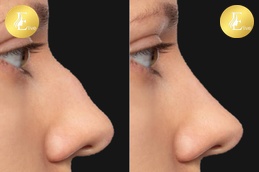
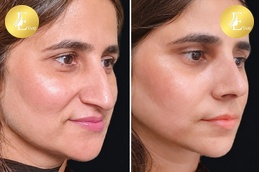
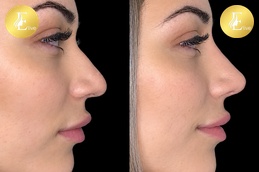
Rhinoplasty Results:
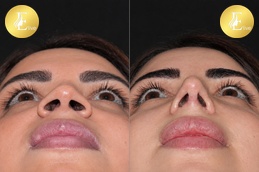
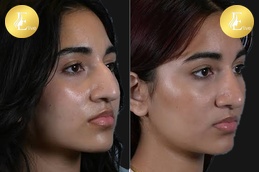
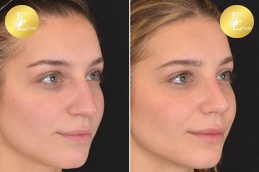
Rhinoplasty results develop gradually as swelling reduces and tissues heal. You may start to see the effects of surgery after a few weeks, but the final look may not be seen until deeper swelling is completely gone. Rhinoplasty can help improve the shape of the bridge, tip, and nostrils of the nose. In most cases, this will be a permanent improvement. However, your nose may change slightly over time due to natural aging and tissue changes. The outcome depends on nasal anatomy, skin thickness, surgical technique, and individual healing.
Why Choose Rhinoplasty in Dubai?
Dubai attracts those looking for advanced cosmetic and functional nasal surgery. Consultation with specialists, different options, and surgical facilities are available. Rhinoplasty can help correct specific problems you are experiencing, such as a humped bridge, large nasal tip, asymmetrical nostrils, or structural issues causing breathing difficulties. It is important to choose an experienced surgeon and medical facility so you can discuss your options and any risks involved.
Types of Rhinoplasty:
Different options are available for rhinoplasty; you will have a discussion with your surgeon to determine what kind of procedure will work best for your case. The different types of rhinoplasty include:
Open Rhinoplasty:
This type of rhinoplasty requires a small incision made across the columella and incisions inside the nose. This allows the surgeon to lift up the skin and see the nasal anatomy better. This may be suitable if a more complicated reshaping is required, such as significant tip adjustment or revision surgery.
Closed Rhinoplasty:
Closed rhinoplasty uses incisions placed entirely inside the nostrils. There will not be any incisions across your columella. The surgeon will reshape the bones and cartilage of your nose through these incisions. This may be suitable for some cases
Revision Rhinoplasty:
Revision rhinoplasty is performed to address concerns following previous nose surgery. This can include fixing any bumps, improving asymmetry, addressing breathing problems, or improving the results of your previous surgery. This can be a more complicated procedure, as the tissue and cartilage may have been altered in your initial surgery.
Tip Plasty:
This is a type of rhinoplasty that can focus on just altering the tip of your nose. This can help if you have a large, broad, asymmetrical, or droopy tip by modifying the underlying cartilage and supporting structures.
Which is Suitable for Me?
Depending on your nasal anatomy, functional requirements, previous surgery, and goals, your specialist will be able to advise on the most suitable technique for you.
Rhinoplasty for Different Nose and Skin Types:
Each nose has a unique bone structure, cartilage shape, skin thickness, and overall facial balance to consider when planning a rhinoplasty.
Rhinoplasty for Thick Skin:
Thick nasal skin and soft tissue can make the fine changes especially in the tip area. The surgeon needs to create appropriate cartilage support and ensure they sculpt appropriately. And thick skin can cause swelling to take longer to settle.
Rhinoplasty for Thin Skin:
With thin nasal skin, the surgeon will have to carefully sculpt the nasal area to reduce the visibility of any small irregularities in the underlying bone.
Rhinoplasty for Wide Noses:
Wide Noses can have a wide nasal bridge, nasal bones, and a wide base to the nostrils. During surgery, the nasal bones may be narrowed and the tip refined.
Rhinoplasty for Droopy Tips:
Bulbous or droopy tips can be sculpted by manipulating and repositioning the lower lateral cartilage. Droopy tips may need some manipulation for support and positioning. The technique depends on cartilage strength and skin thickness.
Who Is a Good Candidate for Rhinoplasty?
Rhinoplasty may be suitable for individuals who want to change the appearance of their nose, improve facial balance, or address structural concerns. You may be a suitable candidate if you:
- Have fully developed nasal structures
- Want to address specific nasal concerns
- Are experiencing specific breathing difficulties
- Are in Good General Health
- Have realistic expectations about the results
- Do not smoke or can stop smoking around the time of surgery.
Who Should Avoid:
Rhinoplasty may not be suitable for everyone; you should avoid rhinoplasty if you:
- Have not completed facial growth
- Are Pregnant
- Have an active infection or illness
- Have uncontrolled medical conditions
- Are a smoker or nicotine user
- Have unrealistic expectations about the procedure
Step by Step Process of Rhinoplasty:
The process steps depend on the type of surgery that you are having but will generally involve planning and multiple steps, as outlined below.
- Initial Consultation: The surgeon discusses your concerns, aesthetic goals, breathing problems, and medical history to plan a suitable approach for you.
- Pre-Surgical Preparation: Your allergies and suitability for anaesthesia are assessed. Recommend any required medical tests before surgery to perform surgery smoothly.
- Anaesthesia: Rhinoplasty is usually performed under general anaesthesia to comfortably perform the procedure.
- Incisions: Depending on the changes needed to your nose, either an open or closed approach will be used. Open rhinoplasty will require a small incision, while closed rhinoplasty will involve incisions made inside the nostril.
- Reshaping: Bone and cartilage are carefully modified, repositioned, or reinforced. Any corrections to the septum or other functional changes may also be performed if needed.
- Closing the Incisions: The skin and soft tissues of the nose will be repositioned, and the incisions closed.
- Follow-Up: The surgeon checks your recovery, removes the external splint when appropriate, and monitors swelling over time.
Rhinoplasty Recovery Timeline:
Rhinoplasty recovery takes place gradually as swelling and bruising subside. Recovery varies between individuals; the usually expected recovery timeline is below.
| Time | What happens |
| First 48 Hours | Swelling, bruising, a blocked nose, and slight discomfort are common. During this period, keep your head elevated. |
| First Week: | Swelling and bruising will start to reduce. Most people will have their nasal splint removed towards the end of the week. |
| Weeks 2–3: | Most bruising will fade. Many patients will be able to go back to doing desk-based work. |
| Months 3–6: | Nasal contours become clearer as swelling settles. |
| 12 Months+ | Your nose will slowly start to settle into its final shape; however, some patients may require further healing. |
Rhinoplasty Cost in Dubai:
Rhinoplasty prices in Dubai may cost AED 19,999 to 49,999 or more. It depends on procedure complexity, surgeon experience, clinical facilities, and the technique used for the individual case. This is not a fixed price; a consultation is necessary to determine the exact cost based on your treatment goal.
| Type of procedure | Cost (AED) |
| Open Rhinoplasty | 19,999 |
| Closed Rhinoplasty | 34,999 |
| Revision Rhinoplasty | 44,999 |
| Rhiniplasty + Septoplasty | 39,999 |
Combining Rhinoplasty with Other Procedures
Rhinoplasty may be combined with other procedures. This will depend on the structure of your nose as well as your facial features, nasal breathing issues, and general health.
- Septoplasty: Corrects deviation of the nasal septum. Can be performed alongside rhinoplasty to address breathing difficulties.
- Chin Augmentation: Enhances chin projection and may help improve the overall balance between the nose and chin.
- Chin Liposuction: Can remove excess fat under the chin.
- Facial Fat Grafting: Can be used to add volume to specific areas of your face.
Why Choose Elive Clinic for Rhinoplasty?
Elive Clinic is always your best choice because we assure you of:
- Experienced plastic surgeons trained in advanced rhinoplasty techniques.
- Personalized, patient-centric care at every step.
- Strict hygiene and safety protocols.
- Advanced equipment and modern surgical facilities.
Frequently Asked Questions:
Is Rhinoplasty Painful?
Rhinoplasty is performed under anaesthesia, so you will not feel pain during surgery. However, some swelling, stuffiness, tightness, and mild discomfort can occur after the procedure.
When Will I See My Final Result?
You will start to notice changes in your nose as the swelling subsides over the first few weeks. However, it can take up to 12 months for your nose to fully settle into its final shape.
Can Rhinoplasty Improve Breathing Problems?
If you are having issues with breathing due to structural issues like a deviated septum or abnormality in the nose, then yes. A surgeon can perform functional correction.
Will I Have a Visible Scar?
With closed rhinoplasty, there will be no external scar. With open rhinoplasty, there will be a small incision across the columella. This scar usually becomes less noticeable.
Can I Have a Revision Rhinoplasty?
Yes. If you have any concerns following your surgery, such as lumpiness, asymmetry, or breathing issues, we can perform a revision rhinoplasty.
How Long Do Rhinoplasty Results Last?
Rhinoplasty is generally a permanent surgery as it alters the structure of your nose. However, natural ageing and changes in facial tissues may gradually affect the appearance.
What Is the Difference Between Open and Closed Rhinoplasty?
Open rhinoplasty uses a small external incision to provide better visibility of nasal structures, while closed rhinoplasty uses incisions inside the nostrils and has no external incision.
Book Your Rhinoplasty Consultation:
If you are looking to reshape your nose or have concerns about your breathing, then book a consultation at Elive Clinic Dubai. During your consultation, our expert plastic surgeon designs a personalized treatment plan based on your goals, nasal anatomy, and what procedures would be suitable for you. You will be able to understand the procedure, recovery, risks, and treatment costs.